

What does the 2026 election mean for schools and the families choosing them? From a school choice perspective, the landscape is shifting. A new federal scholarship tax credit launches in January, and new governors in Texas, Georgia, Iowa and Ohio will now oversee some of the country’s largest voucher and ESA programs. Most are expected to tighten those programs rather than end them. At the same time, mixed results on local school funding votes mean many districts face tighter budgets, which makes attracting and keeping students even more important.
Here’s what changed, and what it means for enrollment planning in the year ahead.
Note: Most results below are unofficial as of Nov. 6, 2026, and a few races are still being counted.
The Short Version
Democrats won both chambers of Congress and flipped governorships in Texas, Georgia, Iowa and Ohio. For enrollment, the biggest effects are on school choice, voucher and ESA programs, and school funding. The federal scholarship tax credit still launches Jan. 1, 2027. New Democratic governors now oversee large state choice programs, and most are expected to tighten them rather than end them. Local funding votes were mixed, which puts more pressure on districts to hold onto students.
Five Things Enrollment Leaders Should Understand
- The federal scholarship tax credit starts Jan. 1, 2027, and could increase private-school demand. Donors get a dollar-for-dollar credit, up to $1,700 per person, for gifts to scholarship groups in states that opt in. About 31 states have opted in, including Democratic-led Colorado and New York, and New Mexico said it would join the day after the election. Repeal bills exist, but most coverage sees repeal as unlikely before 2029. (EdWeek, Chalkbeat)
- State voucher and ESA programs will mostly get tighter rules, not repeal. New Democratic governors will run large choice programs in Texas, Georgia, Iowa, Ohio and Arizona. Texas alone has more than 118,000 students with awards and $1 billion budgeted. Republicans still hold one or both legislative chambers in Texas, Iowa and Ohio, so income caps, audits and eligibility limits are likelier than repeal. Changes like these would affect who qualifies and how families move between sectors. (EdWeek, FOX 26)
- Arizona is the likeliest place for major ESA changes. Gov. Katie Hobbs won reelection, Democrats are positioned to take both legislative chambers, and the superintendent who runs the ESA program may be Democrat Teresa Leyba Ruiz. Hobbs has proposed income caps and stricter oversight for the roughly $1 billion universal program. (EdWeek)
- Funding was mixed, which raises the stakes on enrollment. Colorado (Prop NN) and Minnesota voted more state money for schools. Florida, North Carolina and more than 110 New Hampshire towns capped property taxes. Local levies struggled: only 20 of 69 new Ohio school tax requests passed, and four of five San Antonio-area districts lost tax-rate elections. As budgets tighten, every enrolled student matters more to districts. (EdWeek, WKYC, TPR)
- New leaders will shape charters, takeovers and pre-K. Chicago's first fully elected board leans toward school choice and may be friendlier to charters. Texas Gov.-elect Gina Hinojosa plans to stop state takeovers of districts like Houston and Fort Worth. Georgia Gov.-elect Keisha Lance Bottoms has pledged universal pre-K. (Chalkbeat, FOX 26, EdWeek)
Federal Level
Democrats are on track for at least 54 Senate seats and more than 250 House seats, their largest majorities since 2011. Because the president keeps his veto, analysts expect oversight and budget fights, not major new K-12 laws. (EdWeek, Brookings)
- Federal scholarship tax credit: It launches Jan. 1, 2027, and about 31 states have opted in. House and Senate repeal bills exist, but repeal is seen as realistic only after 2028. (EdWeek, Chalkbeat)
- FY2027 funding: The deadline is Dec. 11. Democrats will chair both appropriations committees in January and are expected to push Title I and IDEA increases after years of mostly flat funding. (EdWeek)
- Where federal K-12 money is run: The current administration plans to move Education Department programs to the Labor and Department of Health and Human Services (HHS). Democrats will try to block moving Title I to the Labor Department and special education to HHS, likely through spending-bill riders. (EdWeek, The 74)
- AI and student data: Rep. Suzanne Bonamici, a contender to lead House Democrats on education, has a bill that would bar using student data to train AI models. It would also require risk assessments and parent notification with an opt-out. It is a proposal only, but it signals where federal policy on student data and AI may be heading. This may influence how edtech vendors approach AI product innovation and how schools use AI. (EdWeek)
State Level
Democrats gained full state control, or were on track to, in Arizona, Michigan, Minnesota, Nevada, Pennsylvania, and Wisconsin. They broke single-party Republican control in Alaska, Georgia, Iowa, New Hampshire, Ohio, and Texas. Legislatures still decide most voucher and funding changes, so divided states will move slowly. (EdWeek)
- Texas: Gina Hinojosa (D) beat Gov. Greg Abbott about 57% to 41%, the state's first Democratic governor since 1995. She has pledged to end the voucher (ESA) program, which has 118,000+ students and $1 billion budgeted, but repeal needs a legislature Republicans still partly control. Comptroller-elect Sarah Eckhardt will audit the program but says she will run it. Hinojosa also wants to stop state takeovers of districts. (KUT, FOX 26)
- Georgia: Keisha Lance Bottoms (D) won governor and has pledged to rework the school funding formula and expand universal pre-K. Georgia also has a large private school choice program. (EdWeek)
- Iowa: Rob Sand (D) won governor, ending 15 years of Republican control. He wants income limits and an annual audit for the universal voucher program, not repeal. (Chalkbeat)
- Ohio: Amy Acton (D) won governor. She favors more accountability for school choice programs, not repeal, and has pledged to fully fund the Fair School Funding Plan. (EdWeek, WKYC)
- Arizona: Gov. Katie Hobbs (D) was reelected, and Democrats are positioned to take both chambers. Hobbs has proposed income caps and tighter oversight for the roughly $1 billion universal ESA program. (EdWeek)
- Wisconsin: David Crowley (D) won governor and did not commit to ending the state's voucher program. (EdWeek)
- North Carolina: Democrats are poised to win the state House for the first time since 2011. A property-tax limit passed with 60.4%, and educators warn it could squeeze school budgets. (EdNC)
- Colorado: Voters approved Prop NN, which requires lawmakers to raise education funding 2% a year, with about $500 million more expected next year. About 60% of 33 local district tax measures passed, but Jeffco and Douglas County measures failed. (Chalkbeat, Chalkbeat)
- Other funding measures: Minnesota voters approved sending permanent-fund revenue to K-12, with 72% yes. Florida and New Hampshire approved property-tax caps; Oklahoma and Wyoming rejected them. Indianapolis approved a $95 million-a-year levy, with about half going to roughly 60 charter schools. (EdWeek, Chalkbeat)
Superintendent and School Board Races
Three state school chief races changed hands or may change hands. Chicago seated its first fully elected board, and that board leans toward school choice.
- Arizona state superintendent: Teresa Leyba Ruiz (D) led Kimberly Yee (R) and was still too close to call as of Nov. 5. The superintendent administers the ESA program, and Leyba Ruiz has called for more regulation of it. (EdWeek)
- Georgia state superintendent: Lydia Powell (D) unseated three-term incumbent Richard Woods (R) and will lead the state education agency alongside a new Democratic governor. (Atlanta News First)
- California state superintendent: Richard Barrera, president of the San Diego Unified board, beat Sonja Shaw, who conceded Nov. 5. He was backed by the California Teachers Association, the state Democratic Party and charter school advocates. (CBS 8)
- Texas Education Commissioner (appointed): Mike Morath is expected to be replaced. Hinojosa's pick could slow or end state takeovers in Houston ISD and Fort Worth. (FOX 26)
- Chicago Board of Education: In the first fully elected 21-seat board, Jessica Biggs won board president, and school-choice-backed candidates are on track for 11 seats. The board may be friendlier to charter schools, and support consolidating under-enrolled schools. A majority of the new members signed a pledge to ban AI-based tools for students and employees. (Chalkbeat)
What to Watch Next
- Dec. 3: California certifies its results.
- Dec. 11: Congress's deadline for fiscal 2027 funding. Watch Title I and IDEA levels and any Education Department riders.
- Jan. 1, 2027: The federal scholarship tax credit launches. Opt-in decisions are still pending in California, Maine and Michigan.
- January 2027: New governors and legislatures take office. Early sessions in Texas, Iowa, Ohio, Georgia and Arizona will show whether choice-program changes are caps and audits or repeal.
Four Key Takeaways for Your Enrollment Planning
Policy will keep shifting over the next two years, but the questions for enrollment teams are practical ones. Here's where we'd focus now:
- Know your state's choice landscape. If your state opted into the federal tax credit or runs an ESA program, more families may weigh private options for 2027-28. Build that into your enrollment forecasts.
- Get ahead of eligibility questions. Income caps and new audit rules could change which families qualify for programs. Clear, early communication helps families make confident choices.
- Plan for tighter budgets. With local levies failing in several states, every student you enroll and keep counts more.
- Review your AI and student data practices. Federal and local proposals on student data and AI are getting attention. Know how your tools and vendors handle student information.
The work doesn't change: helping every family find and enroll in the school that fits their child. We'll keep tracking these changes and share updates as legislatures convene in January.
Sources & Further Reading (21)
Education Week
Some articles may require a subscription.
- Democrats Will Control Congress. What Educators Can Expect — Alyson Klein, Nov. 4
- After Elections, Democrats Will Run School Choice Programs They've Blasted — Arianna Prothero, Nov. 5
- How K-12 School Funding Fared in the Midterms: A Nationwide Guide — Mark Lieberman, Nov. 5
- What the Midterm Elections Could Mean for Schools: 4 Takeaways — Matthew Stone and Yi-Jo Shen, Nov. 5 (video)
K-12 Dive
- What can K-12 expect from Democrats' big win in 2026 elections? — Naaz Modan and Kara Arundel, Nov. 4
Chalkbeat
- How the 2026 election scrambled the politics of American education — Matt Barnum, Nov. 4
- Democrats sweep in blue tsunami. What does it mean for education? — Lily Altavena and Erica Meltzer, Nov. 4
- Chicago voted for its first fully elected school board. What's next? — Nov. 5
- Election 2026: Chicago school board results — Nov. 3–4
- Proposition NN passes, with money going to Colorado education — Jason Gonzales, Nov. 3
- Here's how school district tax measures fared in Colorado this year — Ann Schimke, Nov. 5
- Voters approve Indianapolis tax measure for IPS and charter schools — Andrew Ujifusa, Nov. 3
The 74, EdNC and Brookings
- With House Likely to Flip, Democrats Look to Stop Education Dept. Dismantling — Linda Jacobson, The 74, Oct. 30
- 2026 midterm election results and what they mean for education — EdNC, Nov. 3–5
- The midterm effect: What the 2026 election could mean for public policy — Brookings, Oct. 22
State and Local News
- Gina Hinojosa defeats Gov. Greg Abbott — KUT, Nov. 3
- What changes will Governor-elect Gina Hinojosa bring to Texas schools? — FOX 26 Houston, Nov. 5
- Bexar County voters strike down school district funding measures — Texas Public Radio, Nov. 4
- Democrat Lydia Powell wins Georgia state school superintendent election — Atlanta News First, Nov. 3
- Richard Barrera in line to be next California Superintendent — CBS 8, Nov. 6
- Ohio school levy results 2026 — WKYC, Nov. 5
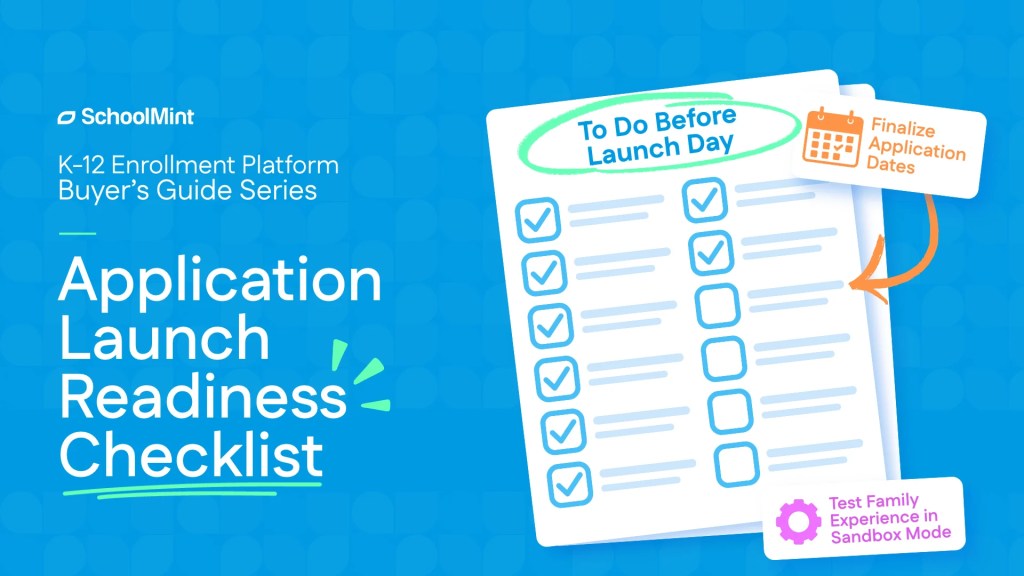 Preparing for a Successful Application Season: An Application Launch Readiness Checklist


